$49 Diagnostics + Waived w/ Repair
A home heating system should warm your living space evenly without sudden interruptions. When your unit starts, runs briefly, and shuts off right away, you face a common HVAC issue known as short cycling. Understanding the primary causes of furnace short cycling protects your comfort, indoor air quality, and equipment lifespan. A standard heating cycle runs for 10 to 15 minutes. Under normal conditions, your system cycles on and off two to three times per hour to maintain your set temperature. Short cycling occurs when the burner shuts down in under five minutes. This leaves your rooms chilly while placing unnecessary strain on internal components.
Frequent short cycles cause rapid thermal stress and drive up fuel usage. In this diagnostic guide, our technicians at New Berlin Heating & Air Conditioning share a practical walkthrough of mechanical issues, airflow restrictions, and safety switches that interrupt heating cycles. Diagnosing specific furnace short cycling causes early helps you avoid costly equipment failures and keeps your home warm all winter.
Restricted airflow is one of the most common furnace short cycling causes in residential systems. When air cannot move freely through your heating unit, internal temperatures climb quickly to dangerous levels.
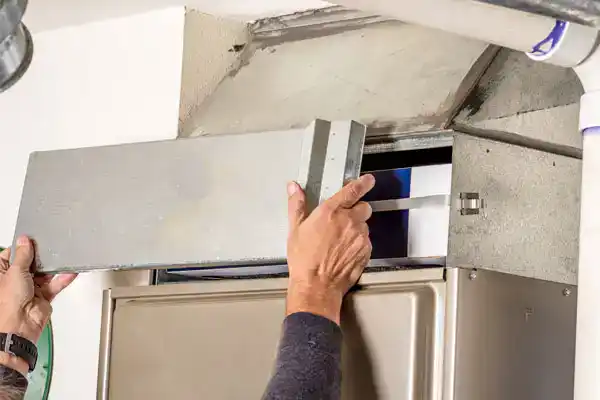
A dirty furnace filter is the most common reason a system turns on and off repeatedly during cold weather. Dust and debris collect across the filter media over time, restricting circulation. When this happens, the blower fan cannot draw adequate return air across the furnace heat exchanger. The heat exchanger transfers thermal energy from burning fuel to indoor air while keeping combustion exhaust gases safely sealed away from your home.
When return airflow drops, heat builds up rapidly inside the supply plenum. Every modern unit includes a high-limit switch to monitor cabinet temperature. When internal temperatures climb into the 160°F to 200°F range most manufacturers set for that model, this safety switch trips.3 It immediately cuts fuel to the burners to guard against overheating. Inspect standard 1-inch pleated filters monthly and plan to replace them every 60 to 90 days under normal household conditions, or sooner if pets or allergies are a factor.1. Thicker 4-inch filters typically last three to six months, while 5-inch media filters can go six to twelve months between changes.
Closing supply vents in unused rooms creates excessive static pressure inside your air duct system. Placing furniture, storage boxes, or thick area rugs over return grilles causes the same restricted airflow. When warm air cannot escape into your rooms, heat remains trapped inside the duct trunk lines. The high-limit switch senses this heat buildup and shuts your system down before reaching your setpoint. Keep all supply registers and return grilles completely open and clear throughout your home to maintain balanced airflow.
Ignition components represent another major group of furnace short-cycling causes. Modern gas furnaces rely on sensitive electronic monitors to confirm combustion before releasing additional gas.
A dirty flame sensor frequently causes your system to fire up and shut down within three to five seconds. The flame sensor is a thin metallic rod positioned directly in the path of the burner flame. It uses flame rectification to verify combustion. The rod senses a small direct current (DC) signal created by ionized gas flames. A healthy flame sensor typically carries a signal of roughly 1 to 10 microamps DC, though the exact range varies by control board.2 Over time, normal combustion produces a thin layer of carbon, rust, or silica on the metal rod. As that coating insulates the rod, the signal weakens until the control board can no longer confirm a flame within its brief detection window. When that happens, the system shuts off the gas valve to guard against unburned fuel accumulation.
You can safely clean a dirty flame sensor with basic hand tools by following these clear steps:
Combustion exhaust blockages are critical furnace short-cycling causes that require prompt inspection. Every modern furnace uses a draft inducer motor. This dedicated exhaust fan clears residual fumes and moves exhaust gases through the flue pipe before ignition begins. A safety pressure switch monitors this draft. If fallen leaves, bird nests, or winter ice restrict the exterior flue pipe, draft pressure drops. The safety pressure switch opens the electrical circuit. It stops the cycle right after startup to guard against toxic carbon monoxide buildup in your home.
Improper equipment sizing and control errors are subtle furnace short-cycling causes that can easily puzzle you. These conditions interrupt heating cycles even when internal parts function normally.
An oversized furnace generates far more British Thermal Units (BTUs) per hour than your home requires. Heating sizing should follow standard ACCA Manual J load calculations published by the Air Conditioning Contractors of America. Manual J calculations measure square footage, insulation values, window types, and regional temperatures to establish correct heating capacity. When a furnace is too large, it floods your living space with intense heat in three to five minutes. The air surrounding your thermostat warms up too quickly. The system satisfies the setpoint before heat reaches outer rooms. These rapid cycles cause wide room temperature swings, waste fuel, and accelerate wear on the blower motor and igniter.
Replacing a functioning furnace is not your only option. You can work with a qualified technician to explore practical alternatives to reduce short cycling:
Thermostat placement directly impacts cycle timing. Installing a thermostat near an exterior door, drafty window, or supply air register causes false temperature readings. Warm air blowing from a nearby register tricks the thermostat into shutting down while other rooms remain cold. Weak batteries or aging electronic thermistors also cause erratic signals. Before scheduling heating installation or calling for professional furnace repair, complete two simple checks: install fresh batteries in your thermostat and confirm that direct sunlight or nearby lamps do not heat the wall unit.
Ignoring rapid heating cycles risks equipment longevity and your comfort. Short cycling accelerates mechanical fatigue, stresses the ignition assembly, and risks cracking your heat exchanger. Over time, frequent starts and stops increase your winter utility expenses and leave your home vulnerable to midwinter breakdowns.
You can address basic furnace short-cycling causes by taking straightforward steps. Replace dirty air filters every 60 to 90 days (sooner for homes with pets or allergies), keep return and supply grilles open, and test your thermostat batteries. Cleaning a dirty flame sensor restores proper flame rectification signals when buildup accumulates. If simple filter changes, vent adjustments, and sensor cleanings do not restore standard 10-to-15-minute cycles, arrange a thorough system inspection. Professional diagnostics evaluate pressure switch operation, measure electrical microamps, and calibrate manifold pressure to help deliver dependable heating performance all winter.
When your heating system keeps turning off before it warms your home, call the licensed team at New Berlin Heating & Air Conditioning. We’ve served Southeastern Wisconsin, including Waukesha County and Milwaukee County, since 1983. Our experienced technicians deliver thorough diagnostics and same-day service. We inspect safety switches, evaluate airflow balance, clean delicate sensors, and restore reliable indoor comfort. Visit our service area page to confirm local coverage and schedule your professional heating inspection, or Contact Us today to get started.
At New Berlin Heating & Air Conditioning, we are committed to ensuring that individuals with disabilities enjoy full access to our websites. In recognition of this commitment, we are in the process of making modifications to increase the accessibility and usability of this website, using the relevant portions of the Web Content Accessibility Guidelines 2.0 (WCAG 2.0) as our standard. Please be aware that our efforts are ongoing. If at any time you have difficulty using this website or with a particular web page or function on this site, please contact us by phone at (262) 999-5746; or email us at ([email protected]) and place “Web Content Accessibility (ADA)” in the subject heading and we will make all reasonable efforts to assist you.